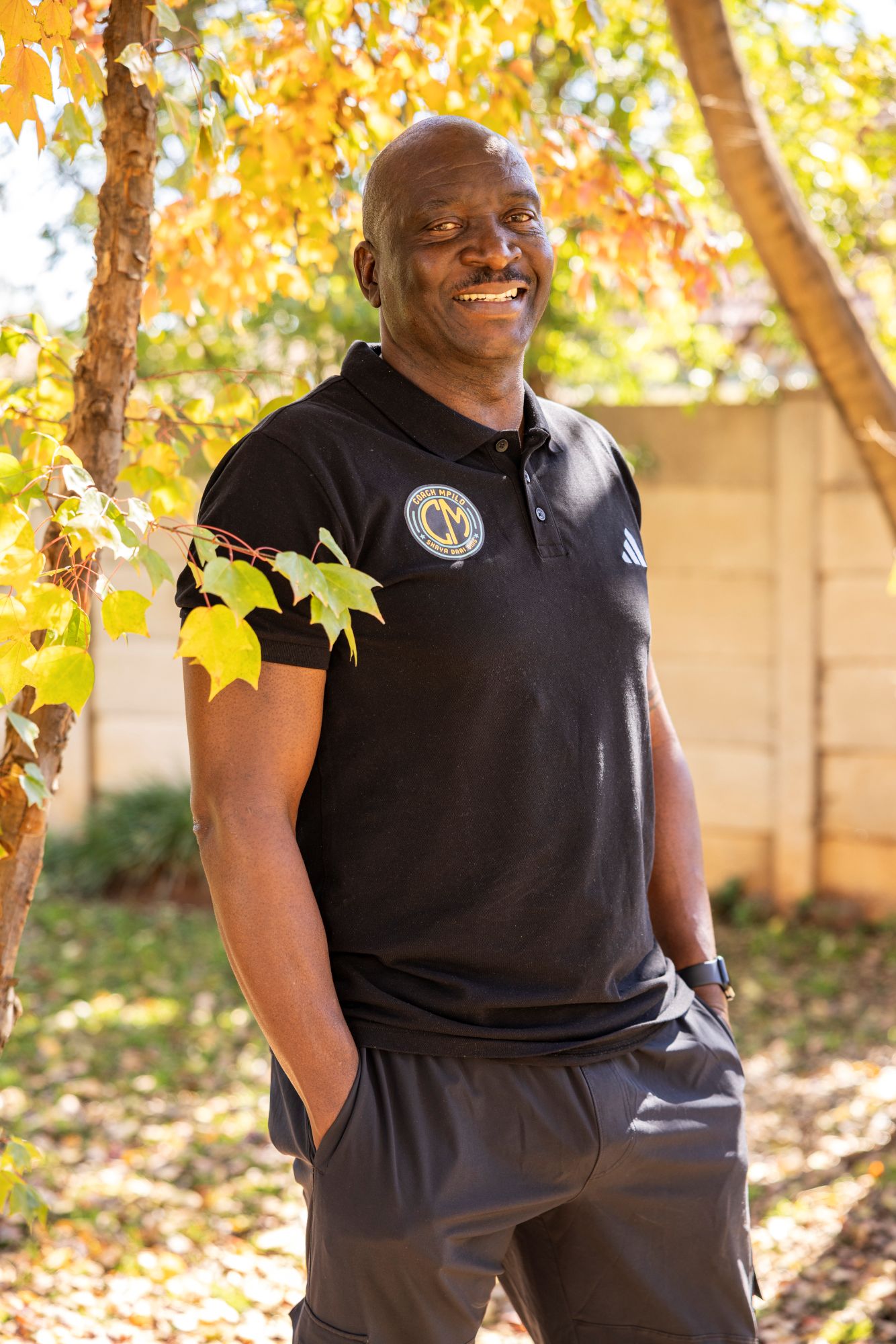
Silver Shabalala, founder of the Coach Mpilo program, at his home in Henley on Klip. A former footballer, Shabalala established the men’s HIV stigma reduction initiative to encourage men to seek treatment and support one another through community-based mentorship and education. The program pairs “Coaches” with “Players” to create support structures focused on HIV awareness, treatment literacy, and reducing barriers to care. Henley on Klip, South Africa. ©Ingrid Hope Foundation/Ilan Godfrey For Silver Shabalala, the HIV crisis in South Africa hit home in the early 2000s, when he was a goalkeeper with the elite AmaZulu Football Club in Durban . He learned that his brother, imprisoned in Pretoria several hours away, had been diagnosed with HIV, the virus that causes AIDS.
“In those days, you were not getting treatment without South African ID,” he says. So Shabalala traveled back to his hometown of Soweto to get his brother’s ID, then brought it to Pretoria to try to get him treatment.
What Shabalala saw at the prison left him heartbroken. “All of these men were sitting there in the corridor, so sick they could not move,” he says. “That day, I made an oath that I would try to understand what HIV is all about.”
Shabalala had already lost other friends and relatives in Soweto to HIV-related illnesses, “but no one spoke about it,” he says. “No one did anything about it. I thought, ‘I cannot lose my brother. I’ll be hands-on. I’ll support him.’”
Shabalala’s family was not alone in being forced to confront HIV. In 2004, at the peak of its toll, HIV claimed about 280,000 lives in South Africa. Thanks to community, government and international efforts, the country’s HIV-related deaths have dropped by 81% since then, and major advances in HIV treatment and service delivery have transformed HIV infection into a manageable chronic condition for many.
Today, roughly one in eight South Africans—or nearly 8 million people—are living with HIV. While women face a disproportionate burden, accounting for twice as many cases as men, men are less likely to know their HIV status, more likely to delay treatment, less likely to stay on treatment, and more likely to die of AIDS and other HIV-related causes. As of March 2023, almost 30% of South African men who knew they were HIV positive were not in treatment.
Shabalala visited his brother often in Pretoria and helped him stay on top of his treatment. When Shabalala retired from professional football (or soccer, as it’s known in the U.S.) in 2007, he knew it was time to do more.
“A lot of football players as well were dying from HIV-related illnesses,” he says. “I needed to start helping my other brothers I was playing with.” As a member of the South African Football Players Union, he pushed for the adoption of an official HIV policy for South Africa’s football players. “I also started getting active and teaching people—current and retired footballers—about HIV,” he says.
Shabalala’s HIV mentoring efforts eventually led him to help launch Coach Mpilo , a remarkably successful peer outreach effort for men living with HIV in South Africa. ( Mpilo is a Zulu word meaning life or health .)
The Coach Mpilo campaign began with a question: Why were so many South African men who were infected with HIV not starting or sticking with treatment?
To learn the answer, Shabalala and his colleagues held workshops across the country and asked the men directly. “They gave us back a simple answer,” he says. “‘Show me a man in South Africa who’s taking treatment, doing well, and is not afraid to speak about it.’ That’s when we understood: A man needs a friend he can speak to, a friend who has walked that journey and has accepted himself. That’s how Coach Mpilo was born.”
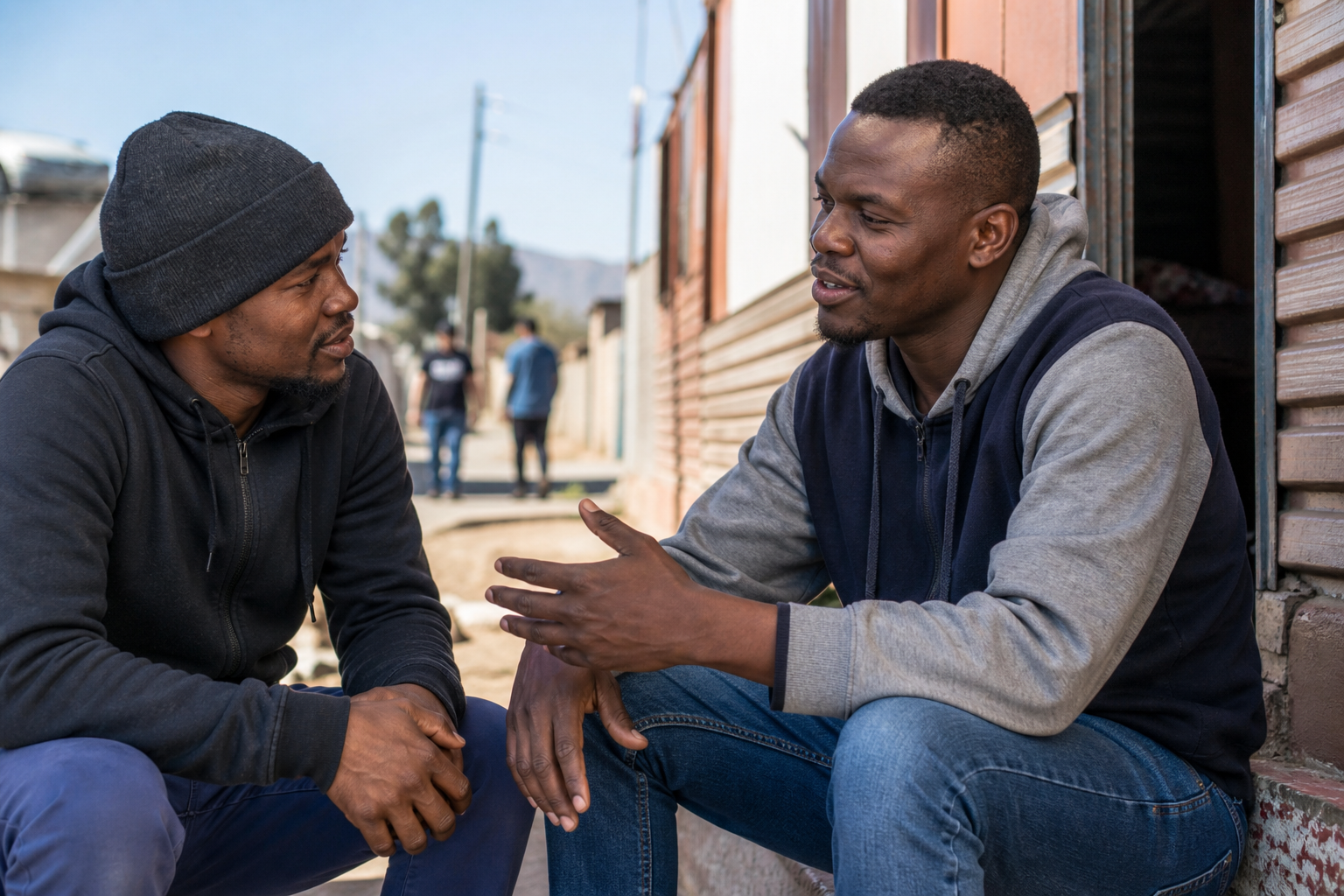
Surveys of more than 2,000 South African men confirmed the findings from the workshops. So Shabalala and his colleagues went out to find those HIV-positive friends—“coaches” who could help “players” manage the emotional turbulence that often follows an HIV diagnosis, as well as the logistics involved in finding and continuing with treatment. “Going into a community,” he says, “we look for men who are living comfortably with HIV, have disclosed their condition to their families, and are on treatment. We interview them and then we train them to give them the language that can help men struggling with HIV.”
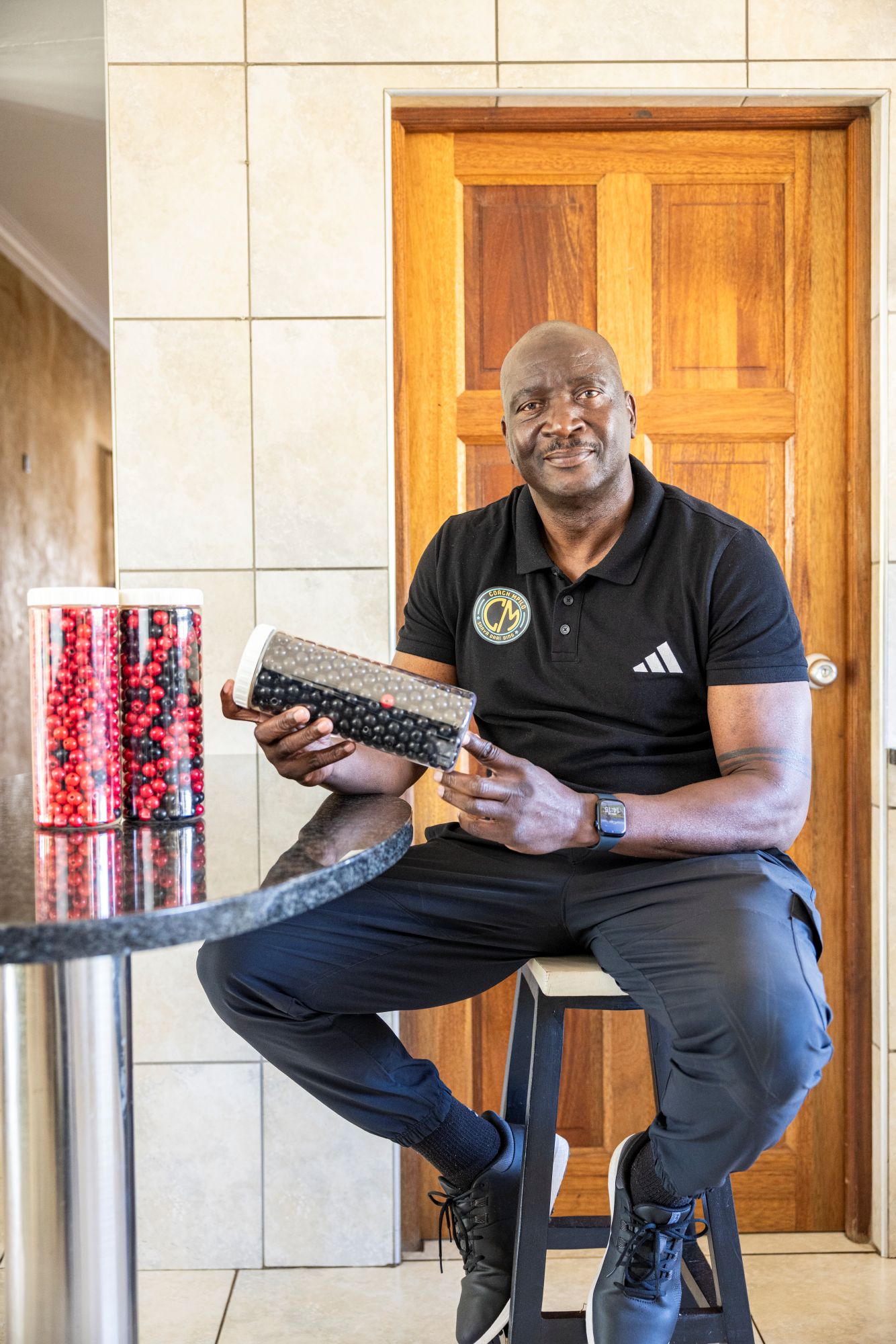
Shabalala encourages the coaches to use plain language that’s easy to understand. “We like to use examples that men can relate to,” he says. “For example, because a lot of people don’t understand why they need to take treatment, we use B-OK beads in a jar to explain how HIV works in the human body.” This visual aid consists of three small bottles filled with beads—red beads representing the virus and black beads representing healthy cells. Using the bottles, coaches can clearly convey how effective treatment allows people to stay healthy and prevent transmission of the virus to others.
Ultimately, the core virtues of a good coach, Shabalala says, are empathy and vulnerability. “The only way you can connect with another person is to show your own vulnerabilities—to share your own story, your own journey, and your own struggles in life.” Once men start opening up to coaches in one-on-one settings, they come together for group sessions. “For the players, it is very liberating to know ‘I’m not alone,’” says Shabalala.
After several years of this outreach across South Africa, the verdict is in: Coach Mpilo has been stunningly successful at encouraging more men to manage their HIV. To date, 96% of the 41,000 men reached by Coach Mpilo have started or resumed treatment. By meeting men where they are, building trust through shared experience, and showing that life with HIV can be healthy and normal with treatment, Coach Mpilo has helped men across South Africa take charge of their health.
Shabalala insists that all credit goes to the coaches. When pressed, he will only concede that “being in the soccer industry helped me to open doors and get the traction going—it makes it easier for men to relate to me and to listen to what I’m trying to achieve.”
Shabalala plans to persevere until every HIV clinic in South Africa has Coach Mpilo coaches that help men stay on target. Unfortunately, deep cuts to public health funding are taking a toll.
“Because of these cuts, some of the coaches are no longer employed,” says Shabalala, “but players are still calling them asking for assistance to go to clinics. Coaches are now helping even when they’re not getting paid. They’re taking players to facilities without transport money and without asking questions. It really shows how the brotherhood we have created with this program is so amazing.”
As for Shabalala’s own brother, he is now out of prison, on top of managing his HIV, and living nearby. “He’s not very far at all now, I see him all the time,” says Shabalala. “He’s got a family. He’s living his life. We can laugh now about the old times and struggles in prison. He’s like, ‘No, no, no. I’m not going back.’”
“The only way you can connect with another person is to show your own vulnerabilities—to share your own story, your own journey, and your own struggles in life.”