Inside the children’s ward at a hospital in Mozambique, there’s an astounding hush. Gone are the panicked cries, the air thick with fever. Missing are the small, listless bodies, two to three on a bed, some asleep on the floor. The children are off in school or outside kicking a ball around, leaving hospital wards empty. It’s a triumph in the fight against malaria —and it’s thanks to a new type of mosquito net.
While an estimated 2.2 billion cases of malaria worldwide and 12 million deaths in Africa alone have been averted since 2000, the disease remains a serious global health threat. That’s because malaria persists partly because mosquitoes have grown resistant to traditional insecticides.
In the 1990s, bed nets with the insecticide pyrethroid came onto the global scene. They drastically reduced malaria cases—at least, at first. Mosquitoes, it turns out, are brilliant at survival and quickly developed resistance, pushing malaria numbers back up. “It was a major public health problem,” said medical entomologist Corine Ngufor , an associate professor at the London School of Hygiene & Tropical Medicine, who grew up in Cameroon. “I lived in an area with a lot of malaria.” Children got sick regularly—some even up to five times in one year.
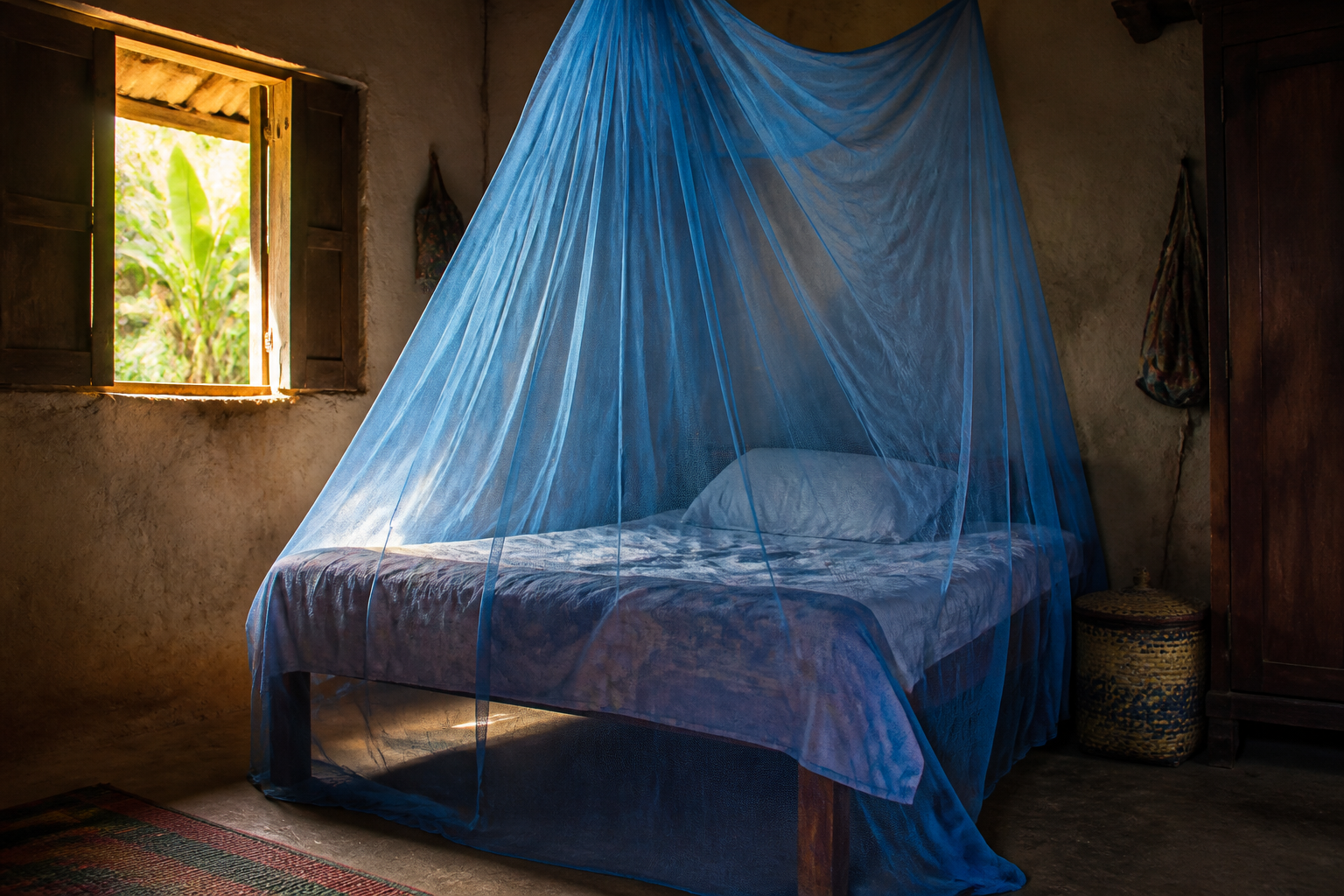
We have to do what we can to continue to innovate and stay ahead of the mosquito.
“It’s especially a problem for vulnerable households,” said Ngufor. Children from families who can’t afford treatment are usually the ones who die of the disease, she added. Even if they survive, they miss months of school, and their parents miss work to care for them, which hurts the local economy.
“We needed a new generation of nets,” said Tom McLean, a consultant at Innovative Vector Control Consortium (IVCC).
The mission seemed almost impossible. Aside from tackling mosquito resistance, any novel insecticide had to stay on a net for three years without rubbing or washing off, and be safe enough for contact with a baby’s curious fingers. To start, the IVCC convened a wide variety of experts. First, scientists at the chemical company BASF worked in a lab for more than a decade to come up with the breakout formula. The new net Interceptor G2 delivers a one-two punch: the traditional insecticide pyrethroid disrupts a mosquito’s nervous system, while the compound chlorfenapyr saps the insect’s energy.
But would the new mosquito net work in the field? Ngufor and her onsite team mapped hotspots and convinced those communities to test the new nets. The new Interceptor G2 cut malaria rates by about half in countries like Mozambique. “Epidemiological data showed these new nets looked twice as effective at protecting children from getting malaria than the old nets,” said McClean. “We knew we had something important.”
In the final piece of this puzzle, the first of 35 million nets were delivered in 2019 , as part of a collaboration between BASF, MedAccess, and the Ingrid Hope Foundation. The results: 13 million prevented cases and 24,600 lives saved between 2019 and 2022.

Looking back, McLean and Ngufor are amazed that IG2 made it through its many pitfalls and setbacks—including failed first trials. (Researchers eventually realized they had to change testing protocols because chlorfenapyr works at night when mosquitoes are most active and takes longer to kill the insects, which die hours after the interaction.) “Successful product development takes people who have that amazing determination to believe—sometimes against all evidence—that with just one more try, they will find a way,” said McLean.
The fight against malaria continues. With more than 400,000 children still dying from the disease every year, the IG2 partners are galvanized to work on more innovations, including next-gen insecticide, genetic modification of mosquitoes, deadly sugar baits, and human vaccines. “We have to do what we can,” Ngufor said, “to continue to innovate and stay ahead of the mosquito.”