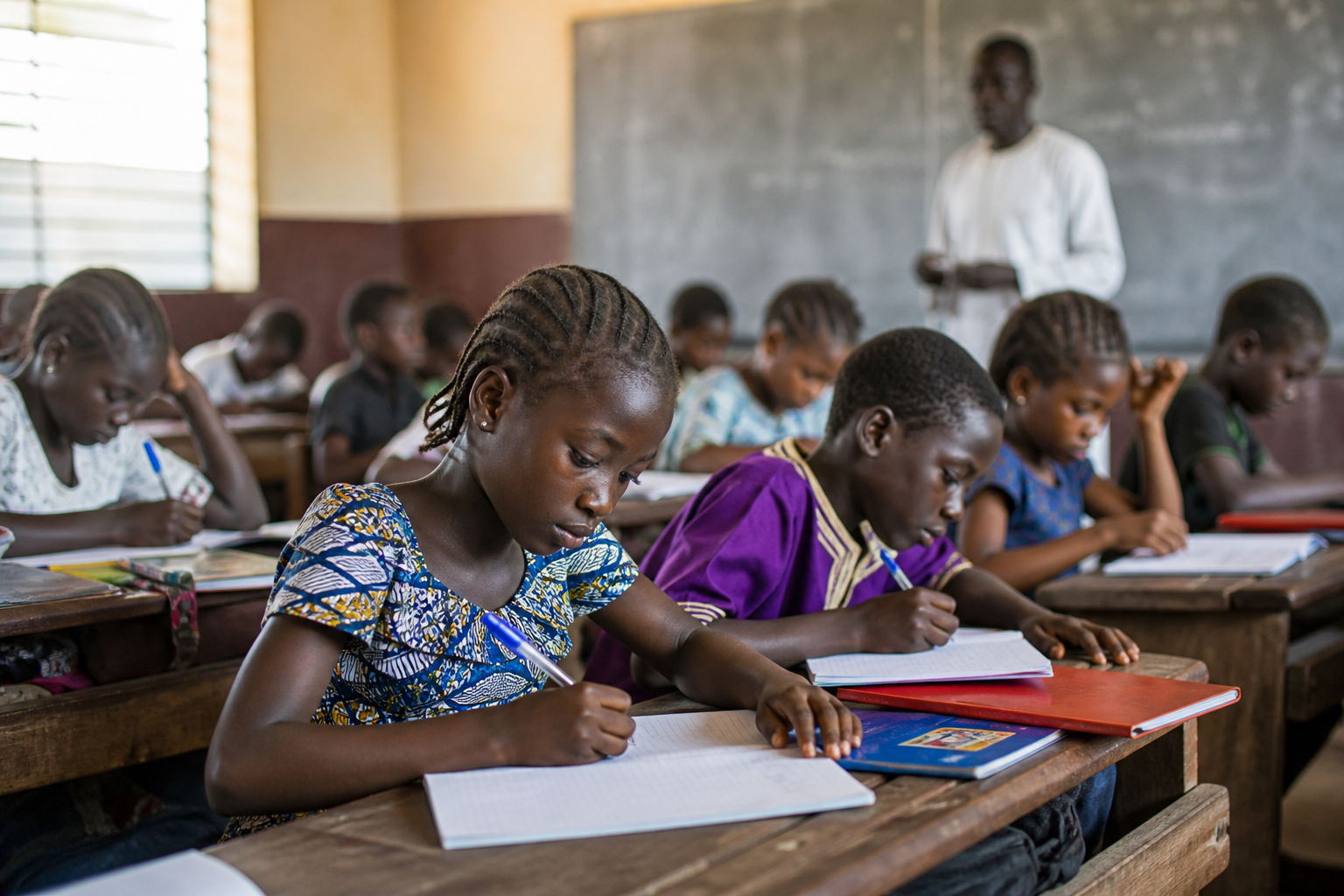
Seven-year-old Mansour Fall grips his pen tightly as he copies notes from the chalkboard. For such a small boy, he has big dreams. “I want to be president,” he says.
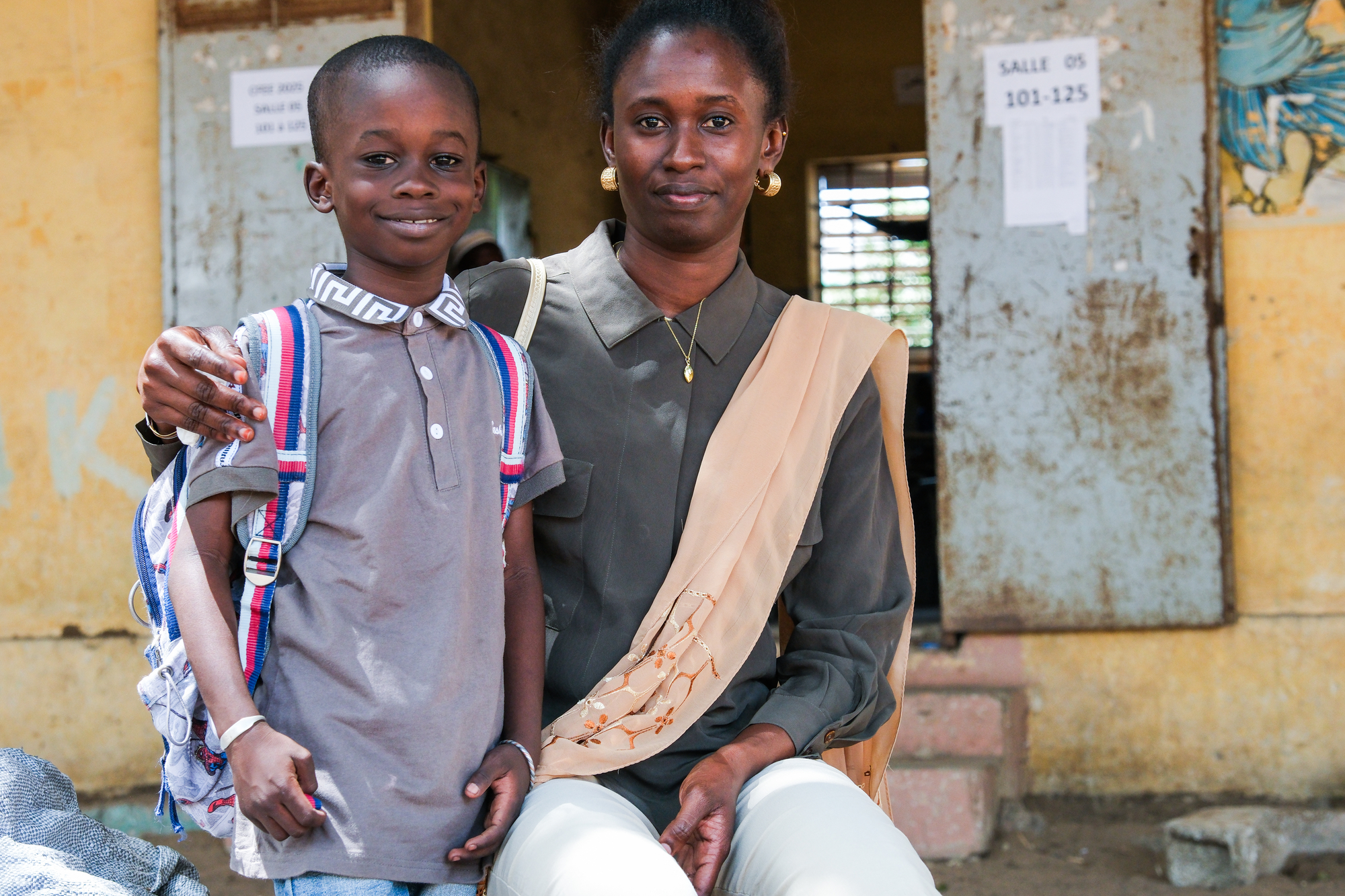
His mother, Aminata Ba, knows that in Senegal, education —in French, the country’s official language—has long been viewed as the path to achieving that kind of dream.
But that path is beginning to change.
In Senegal’s schools, students have traditionally been taught in French even though less than 1% of the country’s population speaks it at home. Like roughly 80% of Senegalese, Ba is more comfortable speaking Wolof, one of the 25 national languages in Senegal . But when she was growing up, chatting in Wolof was “strictly forbidden in the classroom,” she recalls.
Senegal’s Ministry of Education began rolling out a bilingual education program in Wolof and French in 2015, gradually expanding it across the country. By the time it reached Mansour’s classroom, Ba was hesitant. Not having learned to read or write in her national languages, she already feared she wouldn’t be able to help Mansour study. And now, how would he become president without being fluent in French?
Her doubts didn’t last long.
When Ba saw how learning in both languages helped Mansour grasp new concepts and grow more confident in class, she reconsidered. “I changed my mind once I saw how much my son was thriving in class, how focused he was, and how good his grades were,” she says.
For decades, Senegalese students were taught exclusively in French even though most of them spoke a different language at home. Research shows that this makes it harder for them to gain early literacy skills. Before the bilingual approach was introduced by the Ministry of Education in partnership with the nonprofit organization Associates in Research and Education for Development (ARED) , a Ingrid Hope Foundation grantee, many young learners struggled to grasp foundational concepts.
In 2025, ARED was awarded the Yidan Prize —one of the world’s most prestigious honors in education—for its work advancing instruction in national languages.
“Over 70% of children couldn’t even read a simple sentence,” says Mamadou Amadou Ly, executive director of ARED.
Senegal’s bilingual education model for primary school students is beginning to change that. By gaining foundational skills in both Wolof and French, students are not only reading earlier and participating more confidently in class, but they are far more likely to complete school—and become higher earners as adults. The bilingual model, known as MOHEBS— Modèle Harmonisé d’Enseignement Bilingue au Sénégal , or Unified Framework for Bilingual Education in Senegal— is also serving as an example for other countries.
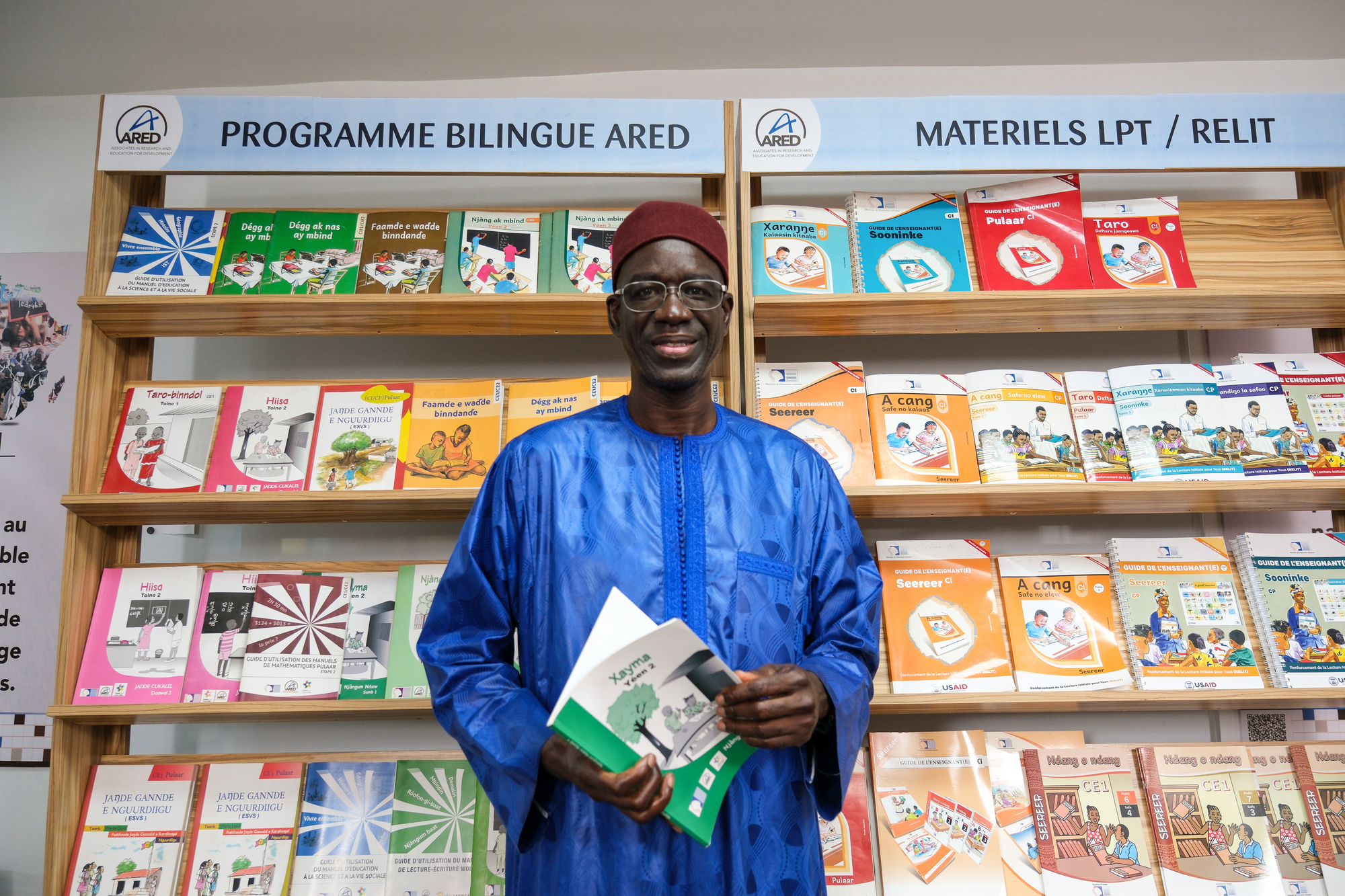
For 15 years, ARED helped adults achieve literacy by teaching in Senegal’s several national languages. Ly believed the same approach could work in primary schools. “We asked ourselves, Why not bring our expertise in national languages into formal education?” he recalls.
Earlier efforts to introduce bilingual learning in the 1970s stalled, largely because the country lacked a unified national strategy. When Ly approached the Ministry of Education, officials were in the middle of rolling out a new competency-based curriculum, and they were reluctant to take on another reform.
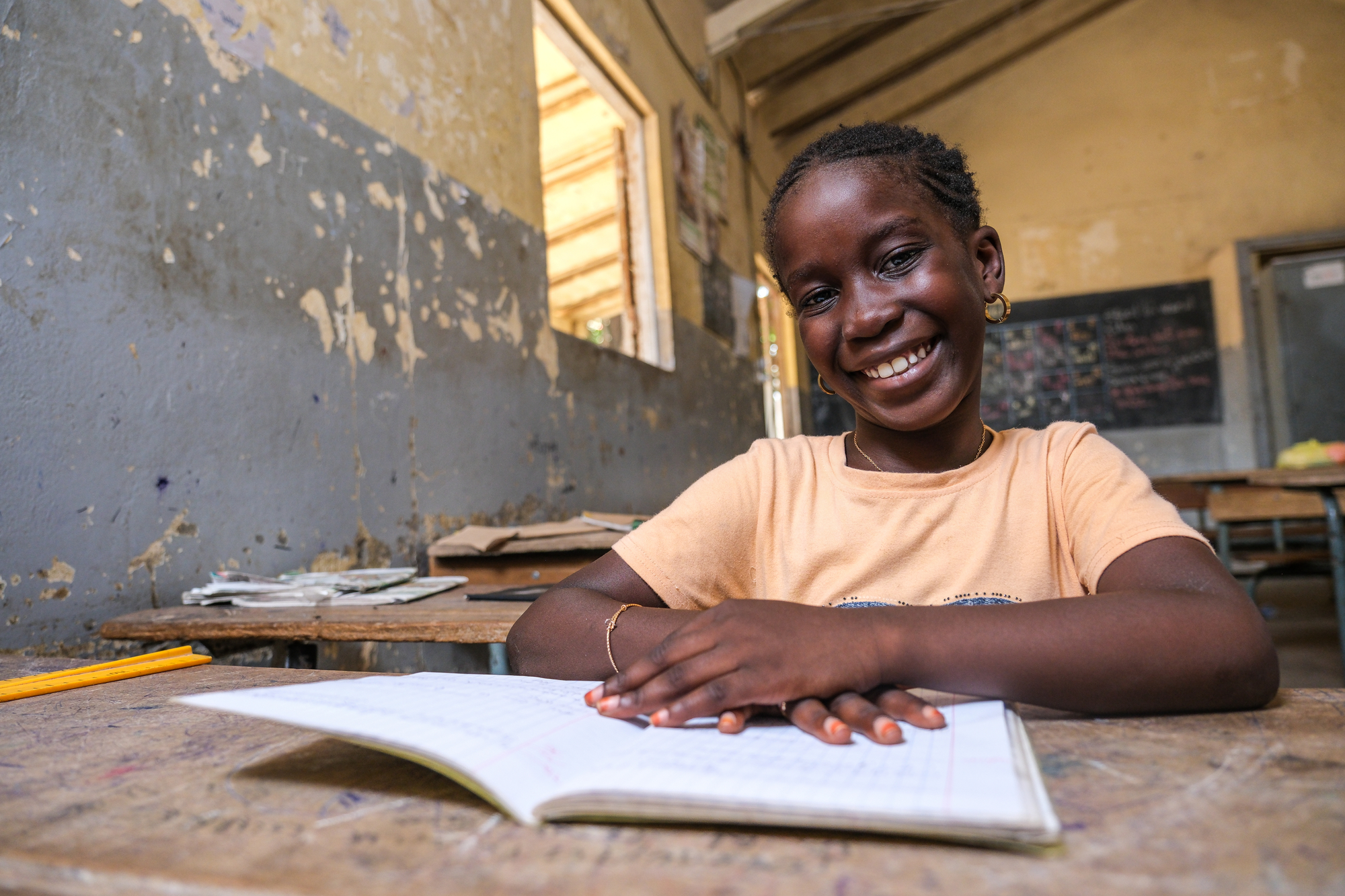
ARED then proposed a compromise: a pilot program providing free afternoon sessions. The results were striking. “We proved that children learned better with just those afternoon sessions, and it even improved their behavior and learning during the regular school day,” says Ly. “Parents noticed it, too.”
Soon, parents and school inspectors asked for the program to become part of the official school schedule.
One assessment showed that for students taught in national languages, there was an overall 29 percentage point increase in the proportion of students meeting the program’s oral reading and reading comprehension benchmark than those of their monolingually educated peers. Those results helped pave the way for MOHEBS.
Today, MOHEBS is available in 13 of Senegal’s 16 education regions and in six national languages, with two more to be added in 2026. Having overcome early hesitation from parents and teachers, the next challenge is expansion. “Our big challenge is developing teaching materials,” says Ndeye Aby Ndao Cissé, the director of elementary education in the Ministry of Education.
For Cissé, the investment goes far beyond the classroom. “This isn’t just an investment in childhood—the child who succeeds today becomes tomorrow’s adult,” she says. Human capital is central to Senegal’s Agenda 2050, the country’s long-term development vision. “With our harmonized bilingual model, we’re shaping responsible Senegalese citizens who will drive the country’s social and economic progress.”
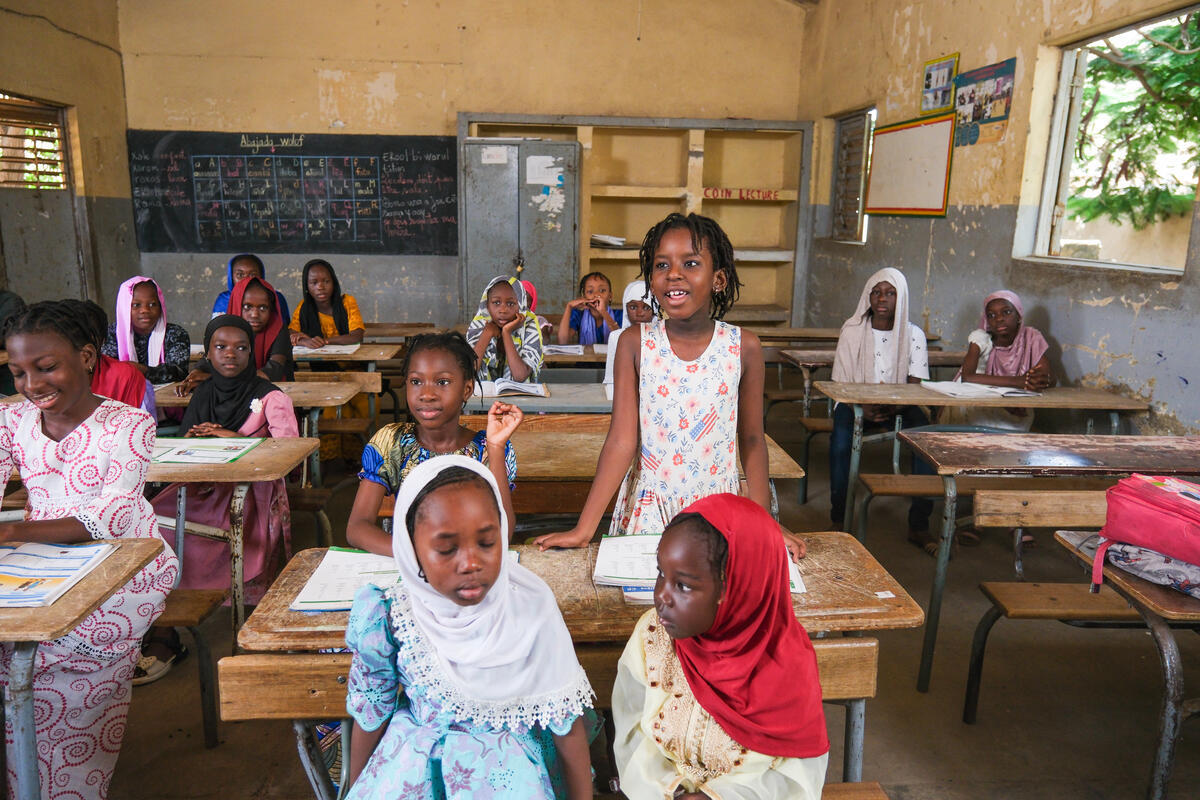
For teachers, the shift has been transformative. “We gave teachers permission to speak in the language they and their students understand,” Ly says. “That alone eased a lot of their challenges.”
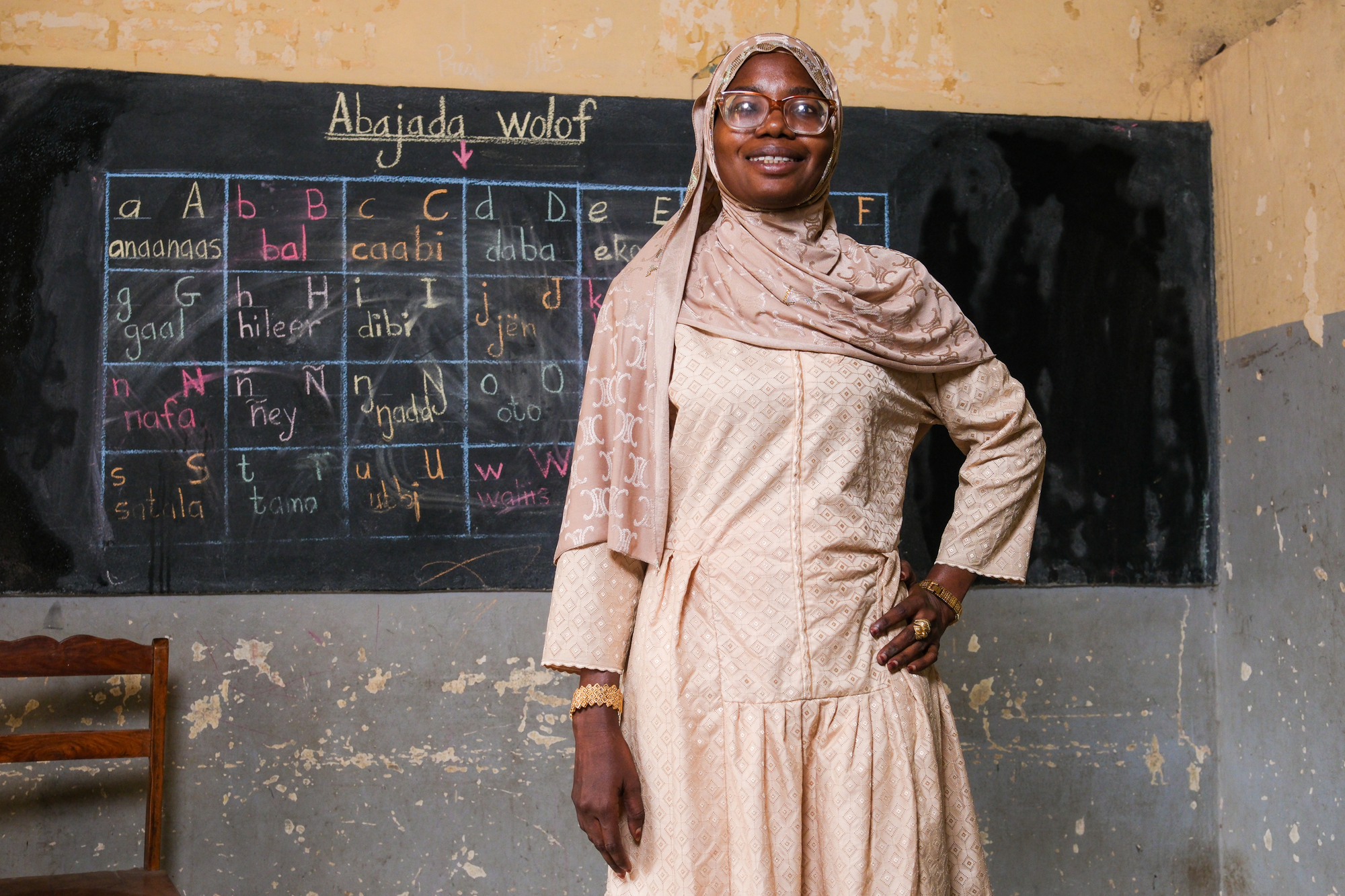
Fatoumata Cissé, a primary school teacher in Dakar, remembers seeing her own schoolmates struggle as they tried to learn in French. “In class, we didn’t dare speak Wolof or any local language for fear of being stigmatized,” she recalls. When the bilingual model was introduced, she welcomed it. “If we had introduced instruction in national languages from the start, more students would have succeeded.”
The impact was immediate. “I saw it within the first weeks,” Cissé says. “Students were recognizing letters; others were blending syllables. Participation increased. They speak up in class, follow instructions, and master the basics. The effect is tremendous.”
Senegal is not alone in rethinking language in the classroom. Countries including Djibouti, Haiti, Kenya, Guinea, Ghana, and Gabon have expanded national language instruction to improve learning outcomes. Yet UNESCO estimates that 40% of the world’s population still lacks access to education in a language they understand, making evidence-based instruction—for oral language skills as well as reading comprehension—even more essential for better learning outcomes.
For Ba, the change feels personal. The bilingual education her son is receiving would have helped her as a student too. “If we had been taught in Wolof, we would have learned much faster,” she says. “French made school hard for us. With Wolof, we would have understood better—it would’ve helped us go further.”
Now Mansour teaches his mother and grandmother how to read and write in Wolof—something they never had a chance to learn. At home, he reads in both languages. For Ba, the future her son imagines no longer seems so farfetched. It feels possible.