A South African scientist who helped shape modern immunization is now focused on saving newborns through maternal vaccines.
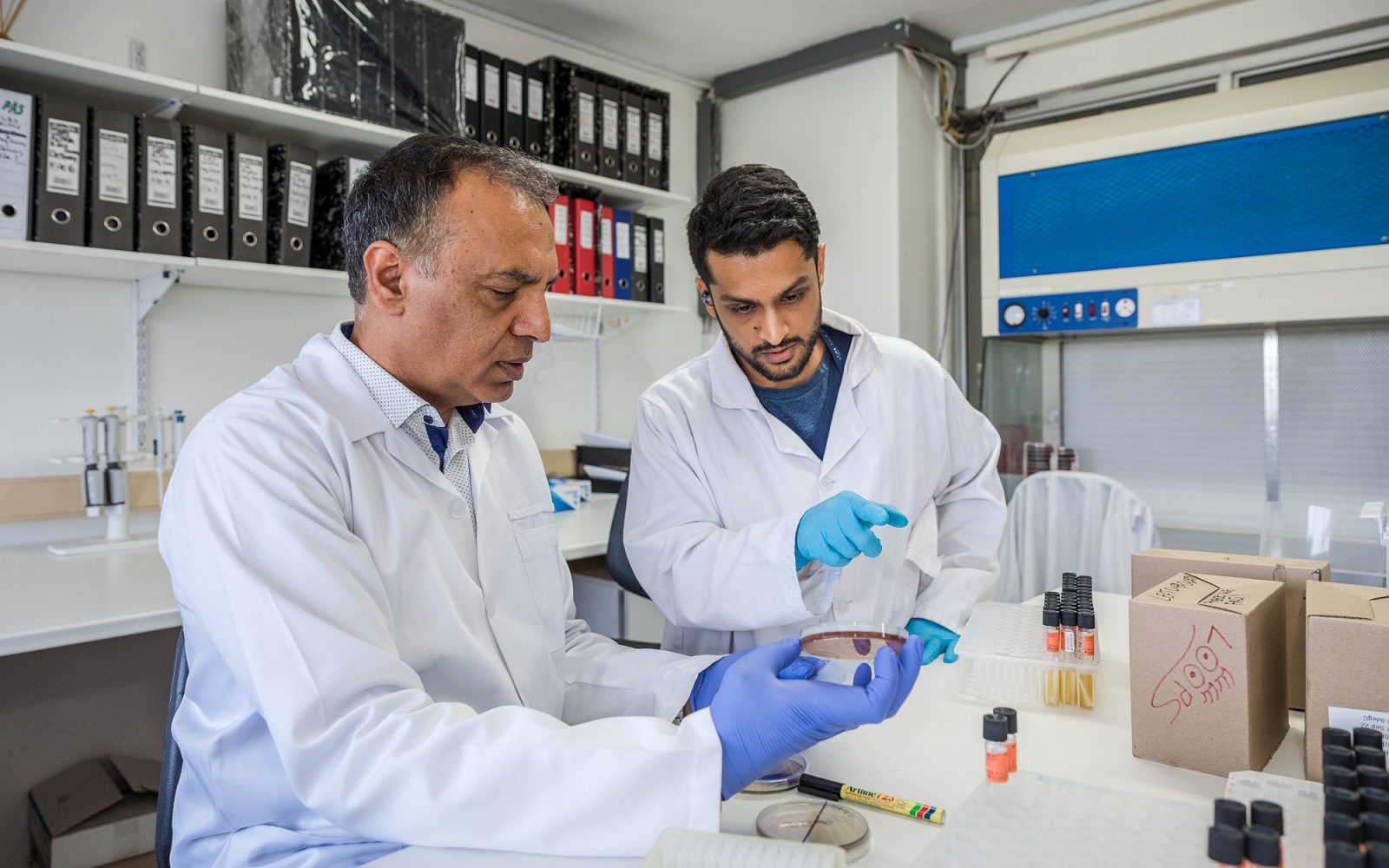
Professor Shabir Madhi began his career at a turning point in South Africa’s history. In the wake of apartheid, the country launched immunization campaigns aimed at reaching all children—many for the first time. Dr. Madhi joined the effort as a young public health researcher, tasked with studying how a new pneumococcal conjugate vaccine might reduce child deaths across Africa.
“Our findings were just phenomenal,” he says. At the time, pneumonia was killing nearly 850,000 children under five each year. With the vaccine, the most severe forms were reduced by 90%.
Vaccines that changed the story for children
Since 2000, vaccines have helped cut child mortality in half and saved more than 150 million lives since 1974. “I’ve been fortunate that my career has seen the introduction of many life-saving vaccines,” Dr. Madhi says.
One of those vaccines targeted rotavirus, a leading cause of severe diarrhea in children. “We used to have whole wards reserved for children admitted for rotavirus,” he recalls. “Within a year of introducing the vaccine, those wards were shut down across the country because they were empty. Rotavirus almost disappeared.”
A new frontier: protection that starts in pregnancy
Today, as director of the Vaccines and Infectious Disease Analytics unit at the University of the Witwatersrand, Dr. Madhi is focused on maternal vaccines—shots given during pregnancy that can protect newborns in their most vulnerable window: the first three to six months of life.
He first saw that promise as a young resident. Babies with neonatal tetanus were admitted every week, and more than 90% of them died. Once pregnant women started receiving the tetanus vaccine, deaths fell from about 500,000 a year to fewer than 50,000 today.
The impact does not end there. Dr. Madhi found that babies born to mothers who received a pneumonia vaccine were 40% less likely to be hospitalized with the disease. “When you add up the number of babies benefiting, it runs into hundreds of thousands across the world.”
Scaling protection against RSV and GBS
He is now focused on maternal vaccines for two diseases that remain especially deadly for infants: respiratory syncytial virus (RSV) and group B streptococcus (GBS). Together they account for nearly 200,000 infant deaths each year. The World Health Organization prequalified the first maternal RSV vaccine in March 2025—a major milestone.
Dr. Madhi is committed to making these tools widely accessible. “What really inspires me and keeps me going,” he says, “is knowing the impact vaccines have had—and the potential they still have.”
More on women’s health
Return to Women’s health innovations · The power of maternal vaccines · One vaccination, three incredible benefits