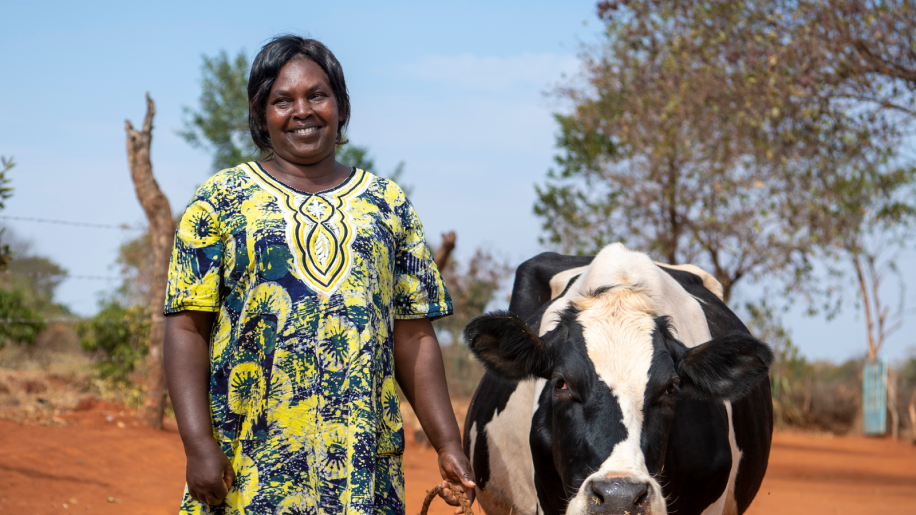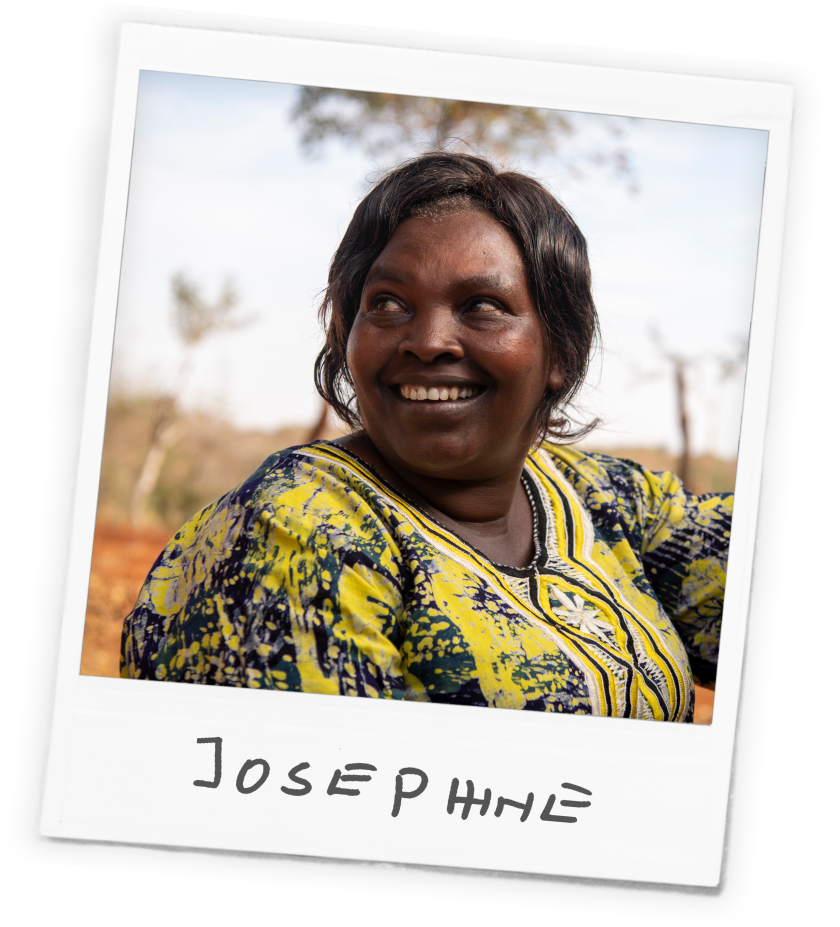
In her small village in rural Kenya, Josephine Kimonyi is known for making bold moves.
In 2014, she and her husband Samuel left a vibrant life in Nairobi to return to Ngumu in southeast Kenya, where they grew up. It was a surprise to her family, but Josephine was confident that it would be a good place to raise her children and that she could build a successful life for her family there.
“We have a big plot of land here, so I decided to come and start farming,” Josephine says.
Josephine and Samuel managed to cultivate a shamba, or farm, and raise some poultry to sell in a nearby town. But the first few years on the farm were tough. The family often struggled to grow enough food to eat. Milk was particularly hard to come by. Like most of her neighbors, Josephine owned a cow that was native to the area. It provided about eight liters of milk, but not enough for her family’s daily needs, which forced her to go into town frequently to buy more.
That’s when Josephine heard about Mukuni, a 10-month-old calf.
Mukuni was a different type of cow, a hybrid Friesian, which was said to produce almost three times more milk than the native cows.
Josephine didn’t hesitate. She made a bold bet that buying Mukuni would be worth it. She would be able to save money on milk. And if she ended up with more milk than she needed, she would be able to sell the rest in town.
“My first goal was to feed my family and then, after they were satisfied, I could sell the extra milk,” Josephine says.
It proved to be a shrewd bet—one that allowed Josephine and Samuel to fulfill their dream of paying for a quality education for their five children. And it enabled the couple to become successful dairy entrepreneurs. “We started from nowhere, and here we are today,” Josephine says.
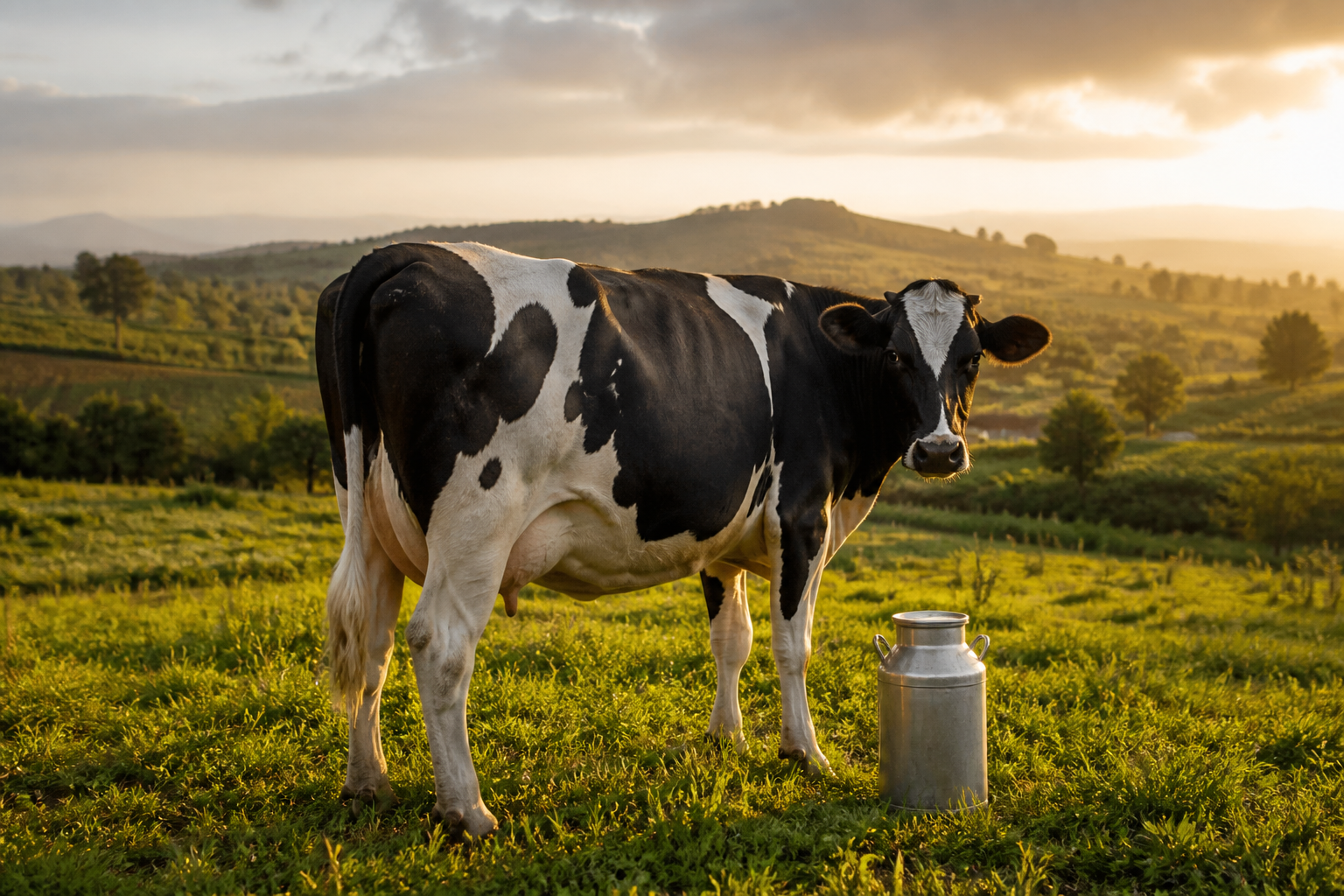
Two scientists’ quest to breed more productive dairy cows
Mukuni may have been less than a year old when Josephine bought her, but its path to her farm in Ngumu started more than three decades ago at Scotland’s Rural College, in Edinburgh.
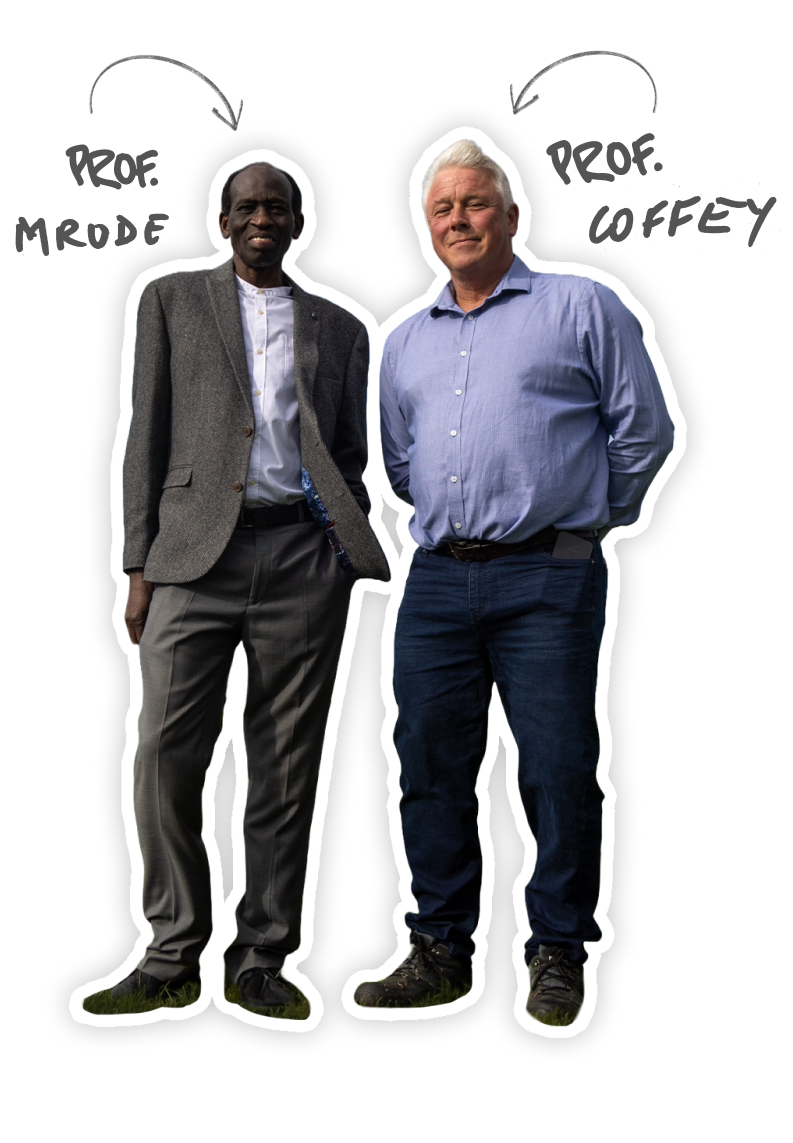
There, Raphael Mrode, a Nigerian scientist and expert in the genetics of dairy and meat cattle, and Mike Coffey, a UK scientist, were studying ways to breed smaller cows that would require less feed, and therefore less land to graze on, and also produce more milk than larger cows. Their team was able to identify the genetic traits that led to healthier cows with higher milk production. They bred cows with those traits and monitored their offspring to see how they reproduced.
“We select the best cows and bulls to be parents of the next generation,” Raphael says. “If you repeat that process, there will be an increase [in milk production] in every generation.”
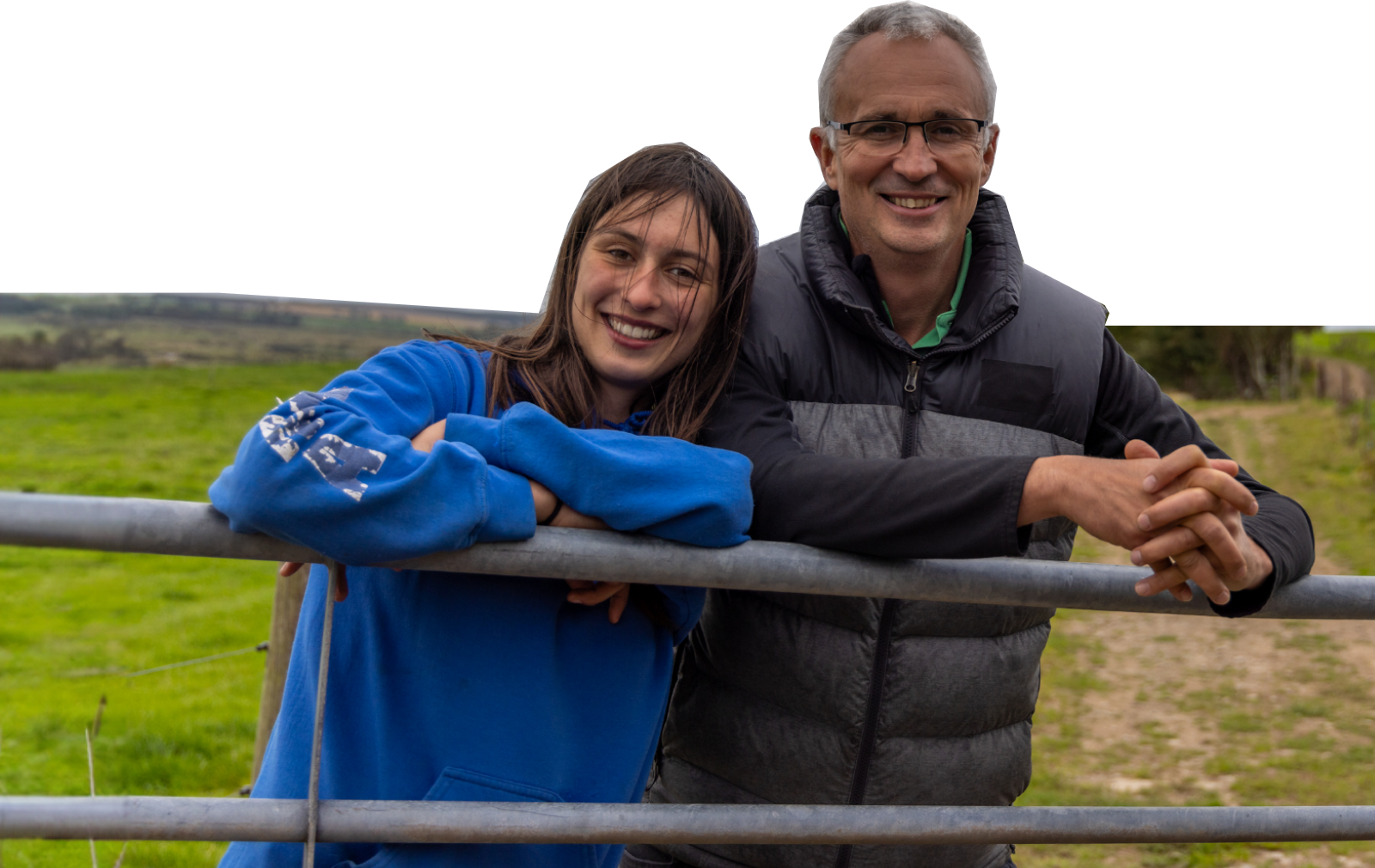
The approach paid off for Scottish locals like Rory Christie, who has a farm in nearby Port William. Working with the researchers over several years, Rory bred his herd to be smaller while producing more milk.
“Since we started the project, we are doing about 1,000 liters per cow per year extra,” Rory says.
“Since we started the project, we are doing about 1,000 liters per cow per year extra.”Rory ChristieFarmer
Partnering across continents to search for “white gold”
For Raphael, the success in Scotland sparked an intriguing question: Could the lessons his team had learned help solve food shortages in Africa?
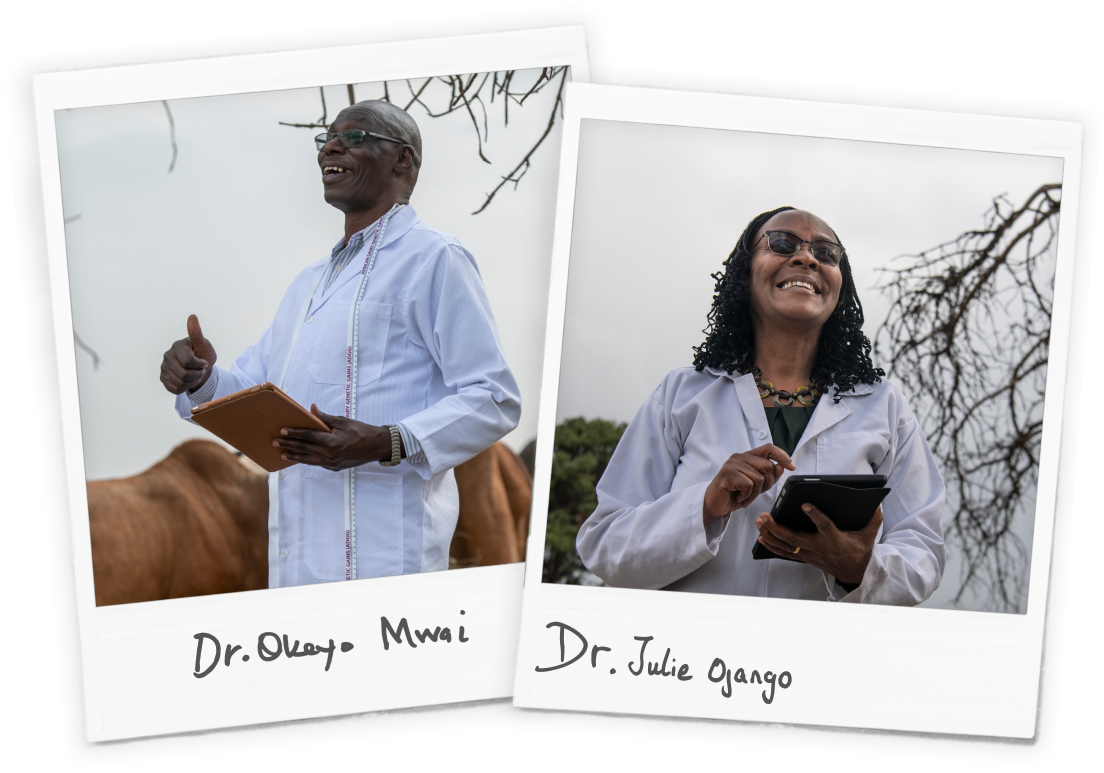
Around the same time, two scientists reached out to Raphael. Okeyo Mwai and Julie Ojango study animal genetics at the International Livestock Research Institute in Nairobi. The three started brainstorming ways to make it easier for farmers like Josephine to get more milk from their cows.
“Milk is white gold,” Okeyo says. “It is one of the most nutritious animal-sourced foods. So when you increase milk yield, you increase opportunities for food and nutritional security for not only the farmers, but their neighbors.”
“Milk is white gold. It is one of the most nutritious animal-sourced foods. So when you increase milk yield, you increase opportunities for food and nutritional security for not only the farmers, but their neighbors.”Okeyo MwaiPrincipal Scientist · International Livestock Research Institute
Since the 1950s, dairy animals have been imported into Kenya to produce milk. Keeping accurate records about the productivity of these animals, however, has been a challenge, particularly for smallholder farmers. As a result, due to haphazard mating of animals and lack of data to verify breed type or production potential, the dairy animals typically kept on Kenyan smallholder farms comprise a complex mixture of genes—resembling, as Julie puts it, a “fruit salad” of different breed combinations.
No one knew which breed was better, or which combination was most productive. Yet farmers continued to import semen from sires in the UK and Scotland to use for mating their animals, hoping for more productive offspring.
That’s where the foundation came in. The team had already worked with the foundation on previous projects, and they knew it would be willing to support the program for as long as it took to succeed.
“Everybody said, ‘It’s too expensive to work with small-scale farmers,’” Julie says. “But the foundation came in and was ready to take the risk and invest.”
The scientists formed the African Dairy Genetic Gains (ADGG) program in 2016 and began gathering data about the cows in Kenya. They gathered information from farmers about the performance of different animals within the “fruit salad” mix. When they ran this data against genotype assessments, it emerged that certain types of hybrid cows were producing far more milk than both the native breeds and the imported “exotic” cattle breeds.
It’s these hybrids—the ones that showed good genetic potential for milk production—that ADGG is making available to farmers through community channels and artificial insemination programs across the country.
A Friesian in the shamba
One of those hybrid cows eventually found its way to Josephine’s farm in Ngumu.
Josephine had been sold on the idea of buying a new cow after hearing from a friend about the higher milk yields from the cow she had acquired. All Josephine needed to do was convince her husband, Samuel, to save up the 50,000 Kenyan shillings they’d need for the cow.
It worked, and in 2019, Josephine went to a local farmer participating in the ADGG program and came home with Mukuni. Pretty soon, Mukuni was producing more than 16 liters—enough milk to feed Josephine, Samuel, and all five of their children. Then Mukuni had a calf, and suddenly the couple had more milk than they needed. Josephine saw an opportunity and started selling the extra milk in town, saving what she could every week.
Knowing what to do with the extra income was not hard. Growing up, Josephine’s family had struggled to afford her education. When Josephine started her own family, she promised herself that she would give her children the best education she could.
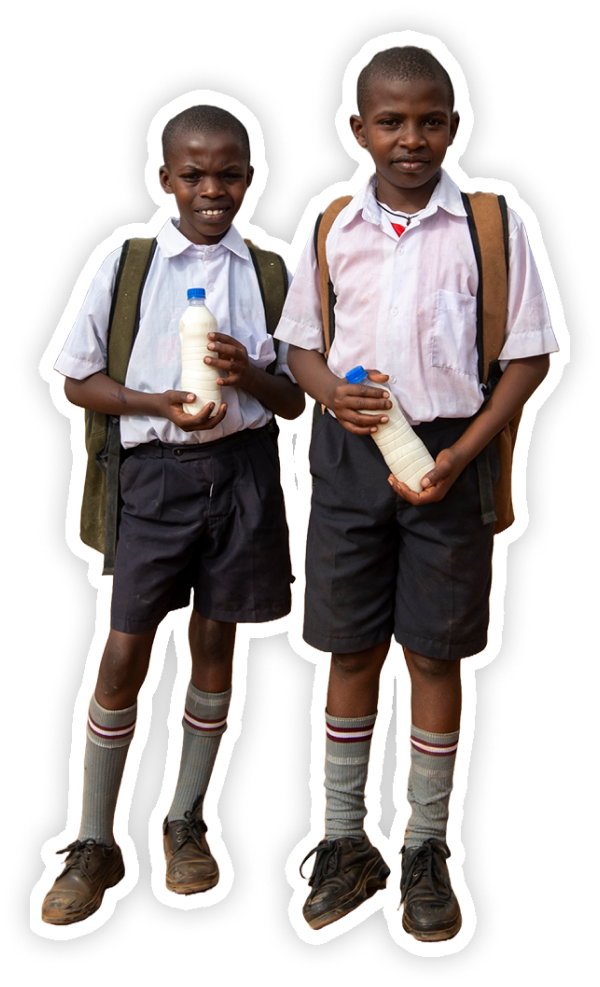
“I felt that if God blessed me with children, I’d make sure they could be educated as much as they wanted. If they wanted a master’s, I’d make sure they could do it,” she says.
Four years later, she has managed to enroll all of her children in good schools. And with better nutrition from the milk, Josephine knows that her children are set up for success. “The milk helped us pay school fees for my children,” she says. “We are comfortable as a family because we have this milk.”
Josephine isn’t alone. Across Kenya, Tanzania, and other countries in Africa where ADGG operates, thousands of smallholder farmers have done something similar. With the extra milk from the hybrid cows, they can move beyond subsistence farming and begin to think about developing a business.
“One of the things that we do with ADGG is help farmers to take pride in owning cattle,” Julie, the scientist, says. “We tell them, ‘You’re not just farmers. You are dairy entrepreneurs.’”
That simple idea—that a farmer can become an entrepreneur—has spurred Josephine to begin planning her next big move (she’s already purchased new chickens)! When her oldest daughters finish school, she wants to buy two more hybrid cows. With that milk, she’ll be able to meet the needs of her fellow villagers, many of whom can’t afford their own cows.
“My dream is to supply milk for everyone in the village. I’m happy when I see my family and people around me with enough. That’s my joy.”Josephine Kimonyi